From June to September this year, students of DUT Leicester International Institute (DLI) traveled across mountains and seas to the wider world, while several international student delegations arrived one after another at Dalian University of Technology (DUT). Over the summer, the Institute sent 139 students to 10 universities in 6 countries and regions for short- and long-term exchange programs, and welcomed 32 international students to campus. Student international exchange at the Institute has achieved a substantive shift from "one-way outbound" to "two-way visits." This is a vivid practice of the Institute in thoroughly implementing the University's "521" International Cooperation Project, actively integrating into the "Lianli Global" Action Plan, and continuously enhancing the influence of the "Study at DUT" brand.
Crossing Mountains and Seas: Understanding the World Through Travel
From August 1 to 23, 44 students went to the University of Leicester in the UK for a three-week tailored international program. As a flagship exchange program jointly developed by the Institute and its partner university, the program has sent 416 students over the past three years. Adopting a small-class teaching model, the program integrates general English, academic English, and English for specific purposes into authentic academic contexts. During the program, students also visited the National Space Centre in Leicester, the University of Oxford, and other sites, immersing themselves in British higher education while experiencing the UK's history, culture, and innovative vitality firsthand.
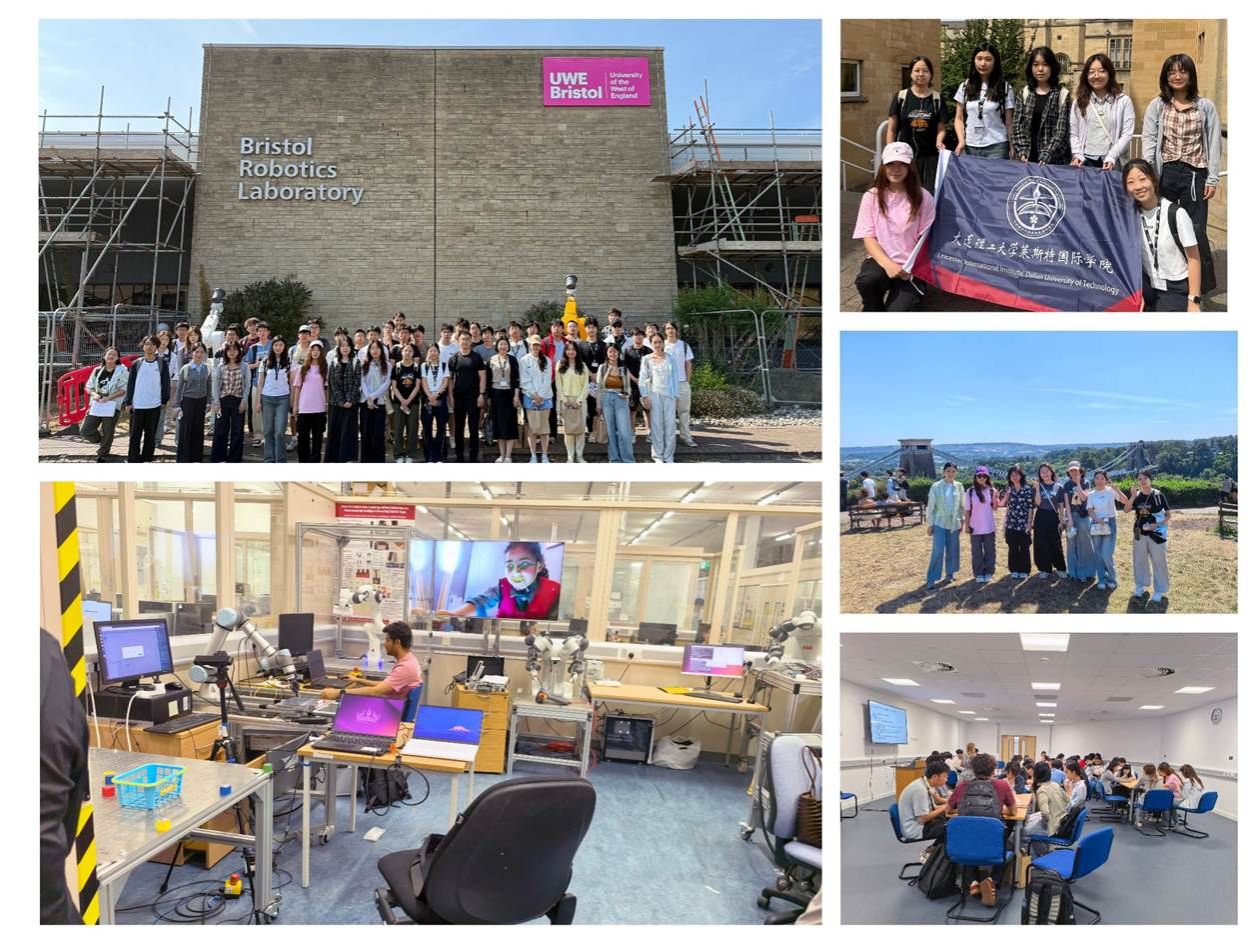
From July 11 to 27, the Institute organized students for the first time to attend the CASE (Computational Applications in Science and Engineering) Summer School at the University of Bristol in the UK. Seven students studied alongside 50 students from Hunan University, Tianjin University, Jilin University, Chang'an University, and other universities, completing a two-week academic exchange. The program covered three components: academic courses in computer science, the Communication and Academic Language Development (CALD) course, and cultural visits. In the first week, students were grouped by programming background into introductory Java programming and concurrent programming tracks; in the second week, the courses extended to frontier topics such as computer vision, and students visited the robotics laboratory of the University of Bristol for a close look at the latest research achievements of British universities in robotics. At the end of the program, all students completed final presentations and course summaries, gaining a more comprehensive understanding of the applications of computer science in science and engineering. As a new exchange channel opened up by the Institute this year, the program will serve as an opportunity to continuously deepen exchanges and cooperation with the University of Bristol.

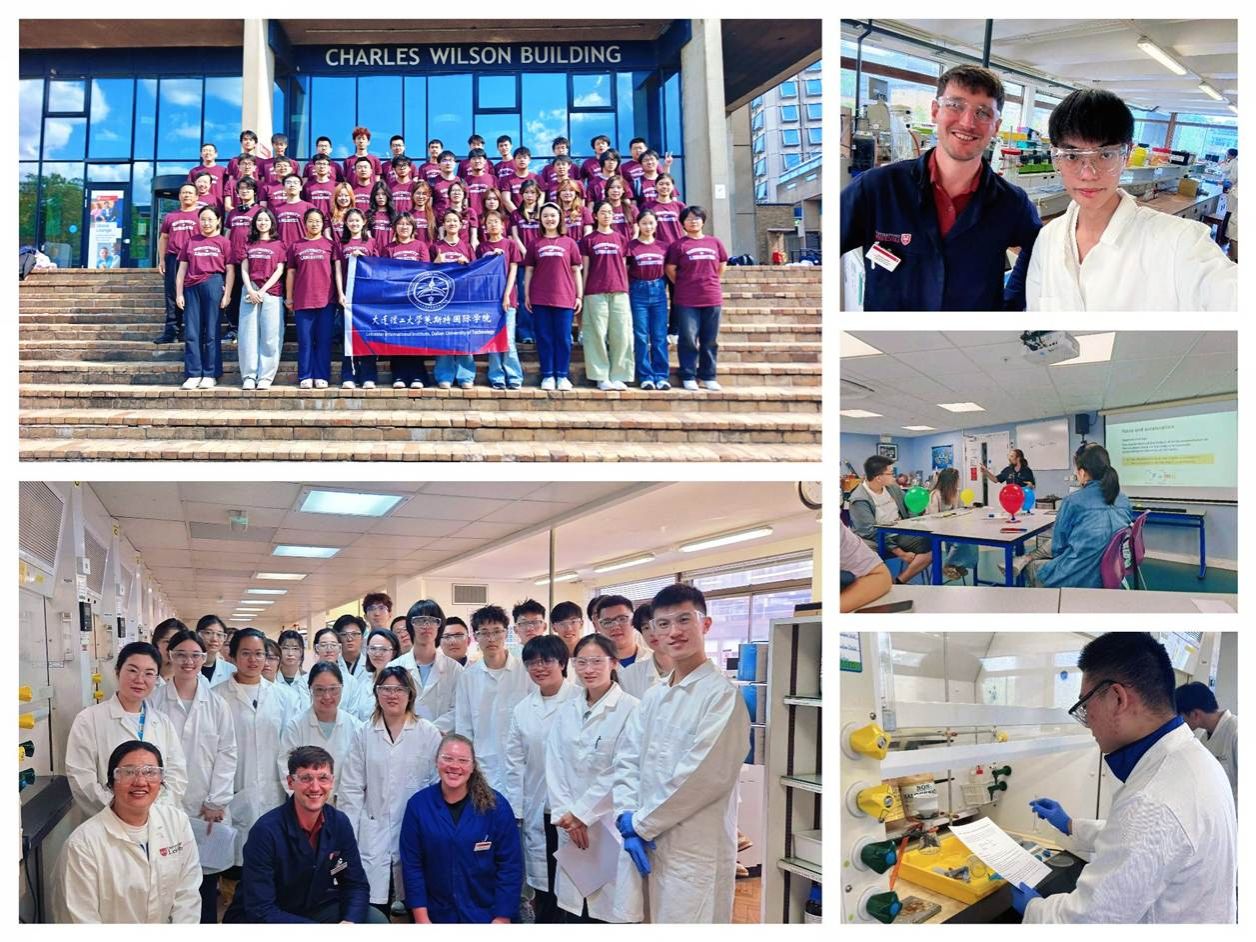
From July 19 to August 2, an undergraduate delegation of the Institute went to Goethe University Frankfurt in Germany for a summer course on chemistry and pharmacy. In the first week, five professors including Professor Andreas Terfort gave systematic lectures on topics such as nanoparticles, medicinal organic chemistry, and biochemistry; in the second week, students conducted experiments in nanochemistry, organic chemistry, and pharmaceutical chemistry in groups, and had in-depth discussions with their research group supervisors. This year, student participation in the program doubled compared with the first edition, application enthusiasm kept rising, and the number of applicants far exceeded the preset cap of the delegation. To ensure program quality, Goethe University Frankfurt arranged for its professor team to interview every applicant one by one. The program has now become another important channel for DLI students to pursue high-level academic exchange in Europe. A student surnamed Sun who took the course commented: "Under the guidance of the lab teaching assistants, I completed the entire gene-editing workflow from start to finish. This learning experience was extremely valuable to me and enhanced my academic competence."
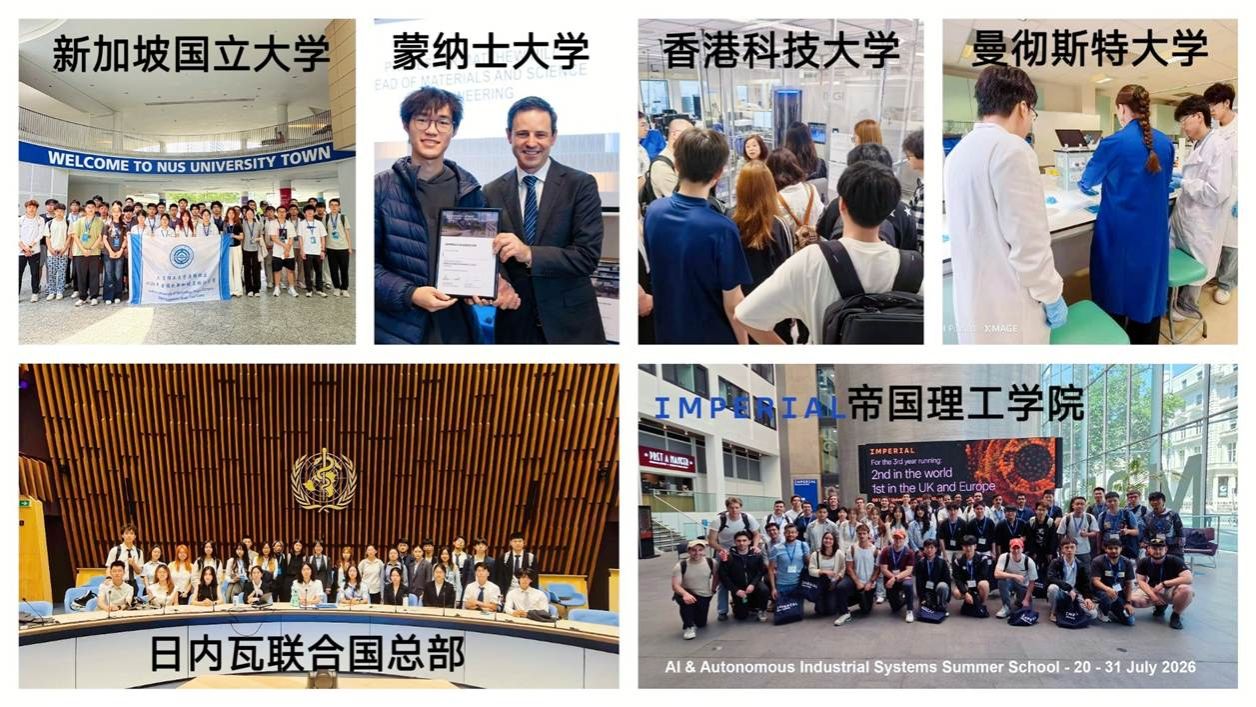
In addition, Institute students also went on exchanges at Imperial Institute London, the University of Manchester, the National University of Singapore, the Hong Kong University of Science and Technology, and the United Nations Office at Geneva, among other universities and institutions, continuously expanding the footprint and map of student exchange.
This year, a total of 278 student participations were recorded in various short- and long-term international exchange programs, covering the UK, Germany, the US, Singapore, Switzerland, Australia, Hong Kong (China), Macao (China), and other countries and regions. Through continuous travel, students have broadened their global vision and honed their professional competence and cross-cultural communication skills.
A Two-Way Journey: Discovering DUT Through Encounter
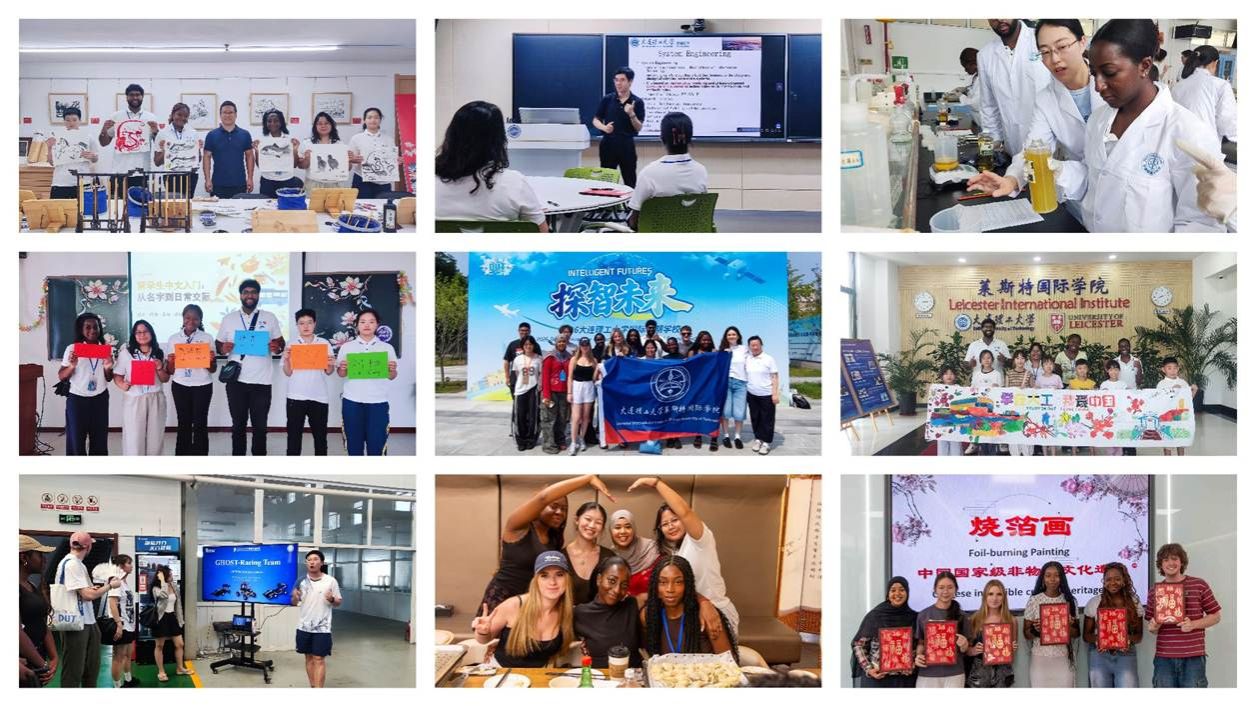
In June 2025, the first group of 18 undergraduates from the University of Leicester came to China for exchange, sowing the seeds of friendship between students of the two universities. Their sharing and recommendations after returning to the UK quietly fueled the enthusiasm of "going to China, going to DUT" across the University of Leicester campus. This summer, 11 home students of the University of Leicester actively signed up for the "Exploring the Intelligent Future" 2026 DUT International Summer School and came to campus. They deeply experienced the learning and living atmosphere of DUT's campuses in Dalian and Panjin, attending classes and working in laboratories together with students from both campuses — studying, discussing, living, and communicating together — as the "classmate friendship" continued to grow. This shared time yielded trust and friendship across borders and made deepening student exchange a shared expectation of both sides. At present, the Institute and the University of Leicester have reached agreement on further expanding the scale of the home-student exchange camp next year, and student visits will be advanced steadily toward normalization and organized, group-based exchange.
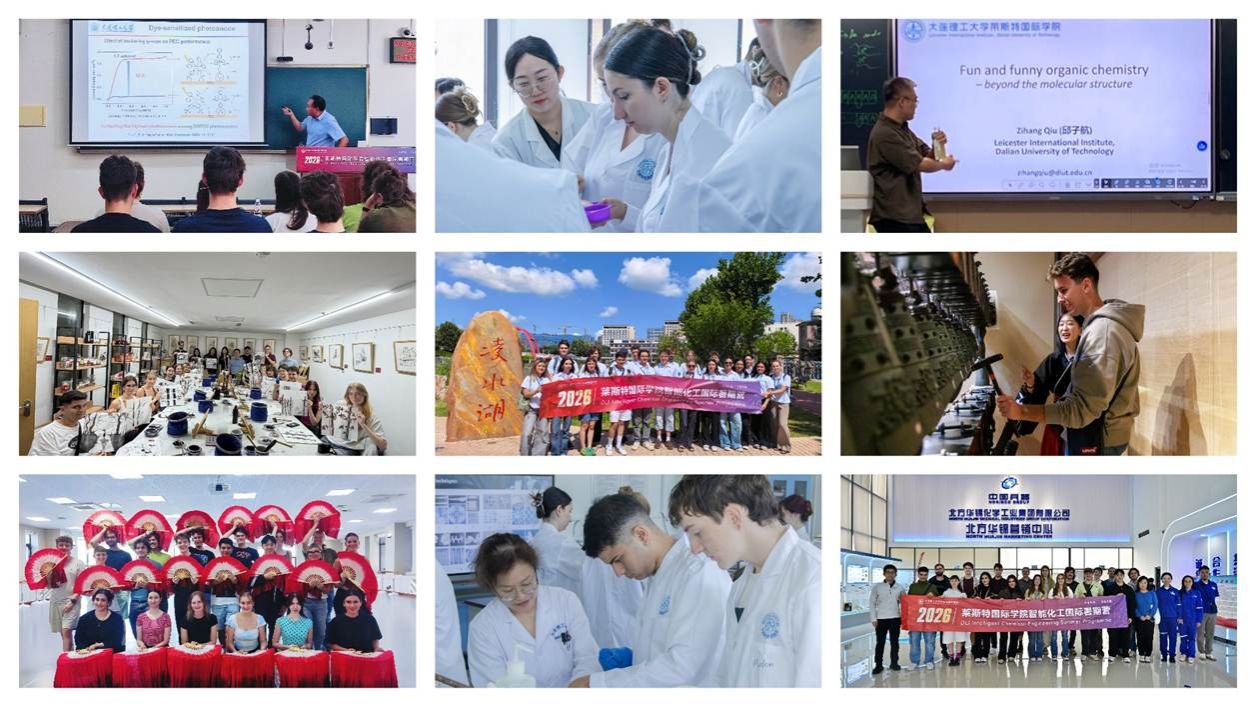
From September 5 to 30, the Institute held the "2026 DLI International Summer Camp on Intelligent Chemical Engineering," welcoming 21 teachers and students from Goethe University Frankfurt in Germany. Camp members came from four countries: Germany, Greece, Spain, and the Republic of Korea. Living and studying on the Dalian and Panjin campuses, the camp members took courses covering academic lectures, laboratory practice, Chinese language learning, cultural experience, and visits to enterprises and cities. They worked hands-on in laboratories, learned to write Chinese characters in language classes, gained firsthand insight into the development of China's chemical industry at the fine chemical pilot-scale testing base and intelligent manufacturing enterprises, experienced traditional Chinese culture such as calligraphy and paper-cutting, and toured cities and villages to see a true, multidimensional, and vivid China up close.
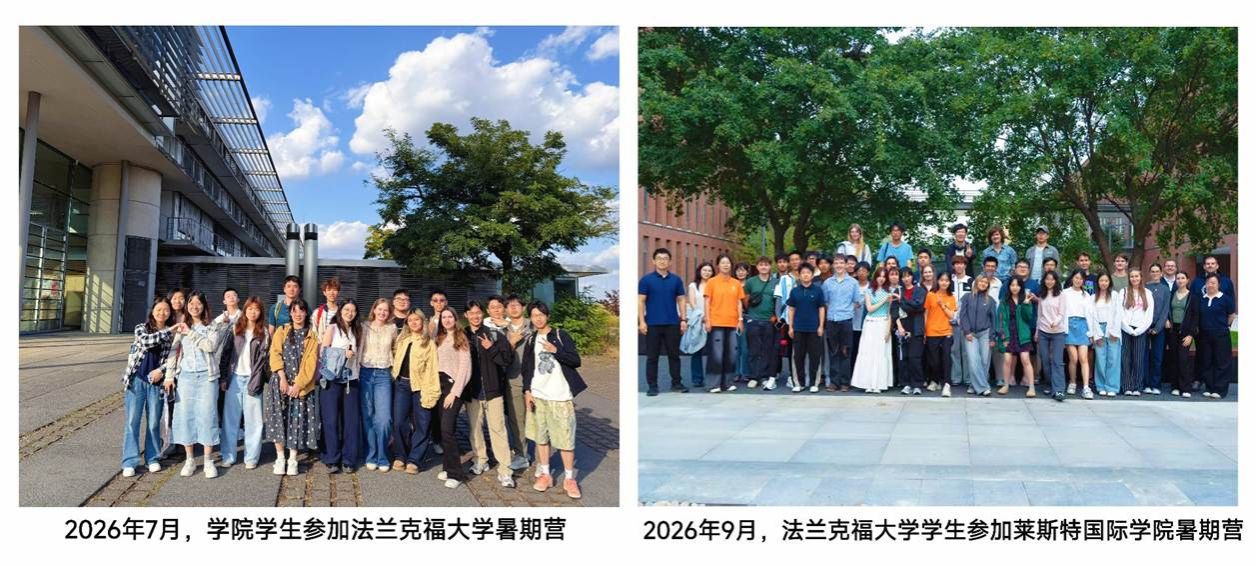
Such two-way interaction unfolded vividly in the summer and autumn of this year: in July, a student delegation of the Institute traveled to Goethe University Frankfurt for study; in September, faculty and students of Goethe University Frankfurt returned the visit as scheduled. Chinese and international students attended classes together, conducted experiments side by side, and explored culture together, deepening understanding and friendship through two-way exchange. By promoting inbound exchange through outbound programs and fostering mutual trust through exchange, the Institute, while organizing students' overseas study tours, has also reached out to encourage students of partner universities to visit campus, pushing two-way interaction from scattered points to a broader picture and gradually into a regular practice.
From Programs to Mechanisms: Sustaining Exchange for the Long Run
International student exchange is an important pathway for cultivating globally competent talent and a distinctive educational strength of a Sino-foreign cooperative institution. From tailoring the University of Leicester summer program, to co-building the International Summer Camp on Intelligent Chemical Engineering with Goethe University Frankfurt, to opening up a brand-new cooperation channel with the University of Bristol, the Institute has consistently advanced student international exchange in a "two-way and organized" manner. Individual programs have gradually consolidated into stable mechanisms, and individual channels have gradually woven into a network of exchange. Among the Class of 2026, 85.2% of graduates pursued further studies, with 33% pursuing postgraduate study in China and 52.2% studying abroad; among those studying abroad, 34% were admitted to universities ranked in the QS Top 10 and 93.6% to the QS Top 100, and 19 students received this year's "Lianli Global" study-abroad special funding of the University. Looking ahead, the Institute will closely align with the University's international development strategy, continue to expand cooperation channels with world-class universities on the basis of optimizing existing programs, and explore the establishment of regular student exchange mechanisms, so that an open and inclusive international atmosphere becomes a distinctive educational feature of the Institute, and so that more students grow through mutual learning in exchange and become outstanding talents with global competence.